
Slow Living
In a world that rewards speed, noise, and constant connection, slow living is not about doing less.
It is about doing things with intention.
It is choosing depth over distraction.
Presence over pressure.
Space over accumulation.
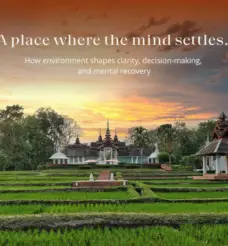
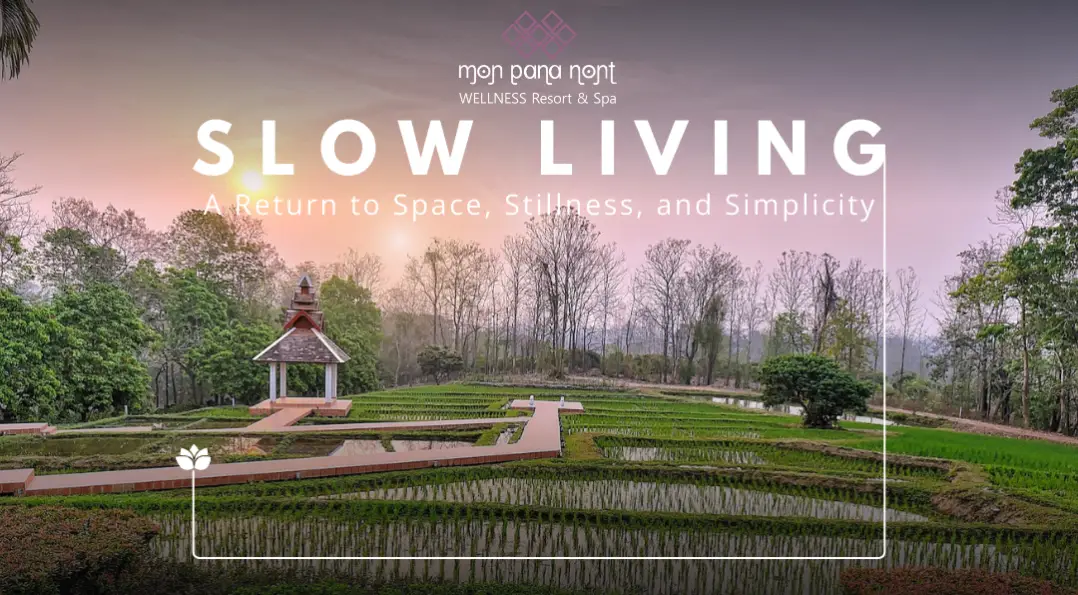
For many who arrive in Northern Thailand — especially in places like Mae Taeng, where mountains hold the horizon and rice fields move with the wind — something inside them begins to soften. The body slows down before the mind understands why.
Slow living is not a trend.
It is a quiet remembering.
What Slow Living Really Means
Slow living does not mean laziness.
It does not mean rejecting ambition.
It means aligning your pace with what truly matters.
Instead of rushing through breakfast, you taste it.
Instead of checking your phone first thing in the morning, you notice the light.
Instead of filling every hour, you allow space between moments.
In that space, clarity returns.
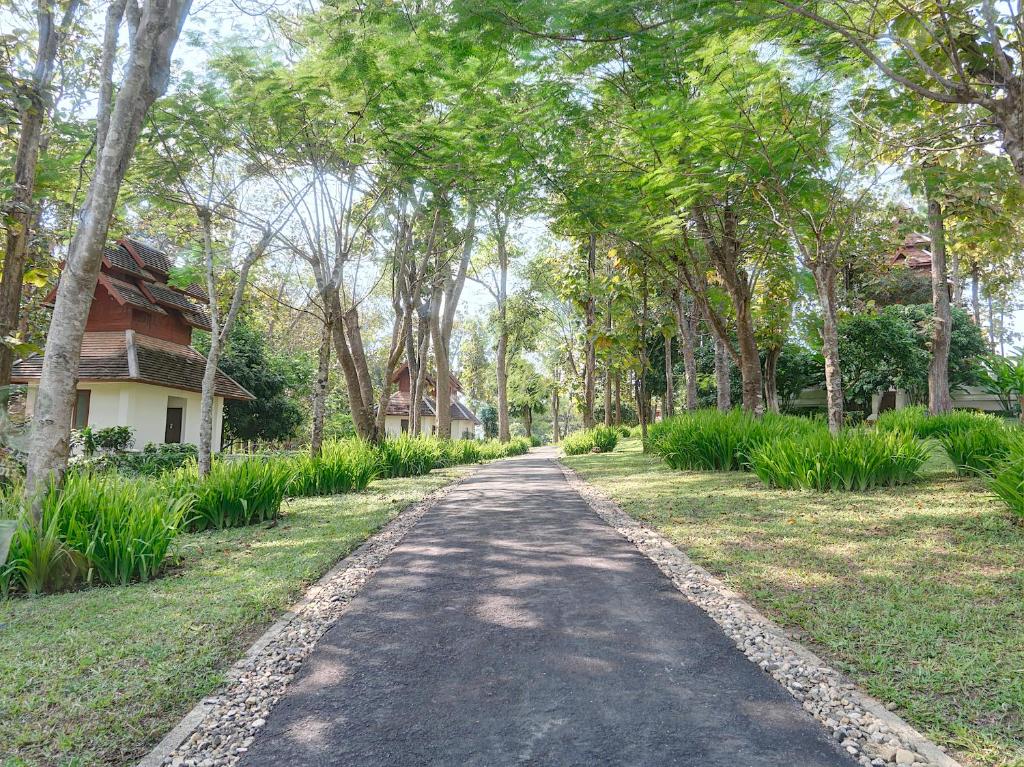

The Science Behind Slowing Down
Modern neuroscience and psychology increasingly support what contemplative traditions have always known:
Slower breathing regulates the nervous system.
Time in nature reduces cortisol levels.
Reduced multitasking improves cognitive function.
Mindful awareness strengthens emotional regulation.
When we slow down, the parasympathetic nervous system — the body’s “rest and restore” mode — becomes active. Heart rate stabilizes. Muscles soften. Thoughts become less scattered. Stillness is not emptiness. It is recalibration.
Why We Resist Slowness
Speed can feel productive.
Noise can feel important. But constant acceleration disconnects us from ourselves. Many people only realize how exhausted they are when they finally enter a quiet place. At first, the silence feels uncomfortable. Then, gradually, it feels necessary.
True rest is not collapse. It is conscious pause.
Increasing blood circulation and stimulating the immune system. Feel flawless after a spa programme fit for a sultan, with separate male, female and couples’ facilities.
Slow Living and Modern Luxury
In today’s world, true luxury is no longer excess. It is space.
Space to think.
Space to feel.
Space to breathe.
Simplicity becomes refinement.
Stillness becomes strength.
And time — unhurried time — becomes the rarest offering.
Returning Home to Yourself
Slow living is not something you purchase.
It is something you practice.
Whether you are in the mountains of Chiang Mai, walking through a rice field at sunrise, or simply sitting quietly at home — the invitation is the same:
Pause.
Breathe.
Notice.
And yet, environment matters.
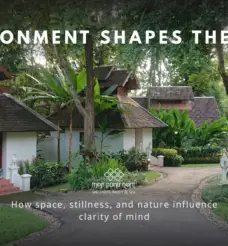
When you stay in a place intentionally shaped around Space, Stillness, and Simplicity — as at MonPanaNont WELLNESS — the shift often happens more naturally.
You do not have to force calm.
You do not have to practice quiet.
The surroundings gently guide you there.
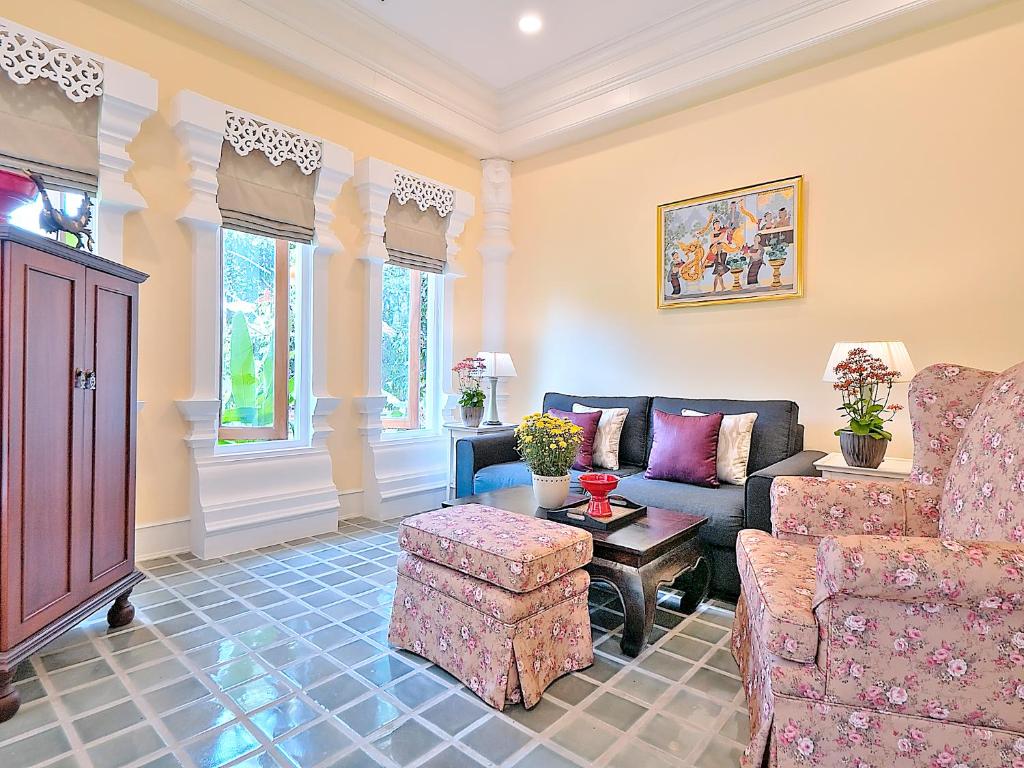
What may feel difficult in everyday life becomes easier when the architecture, the land, and the rhythm of the place are already aligned with slowing down.
And then, without effort, you begin.